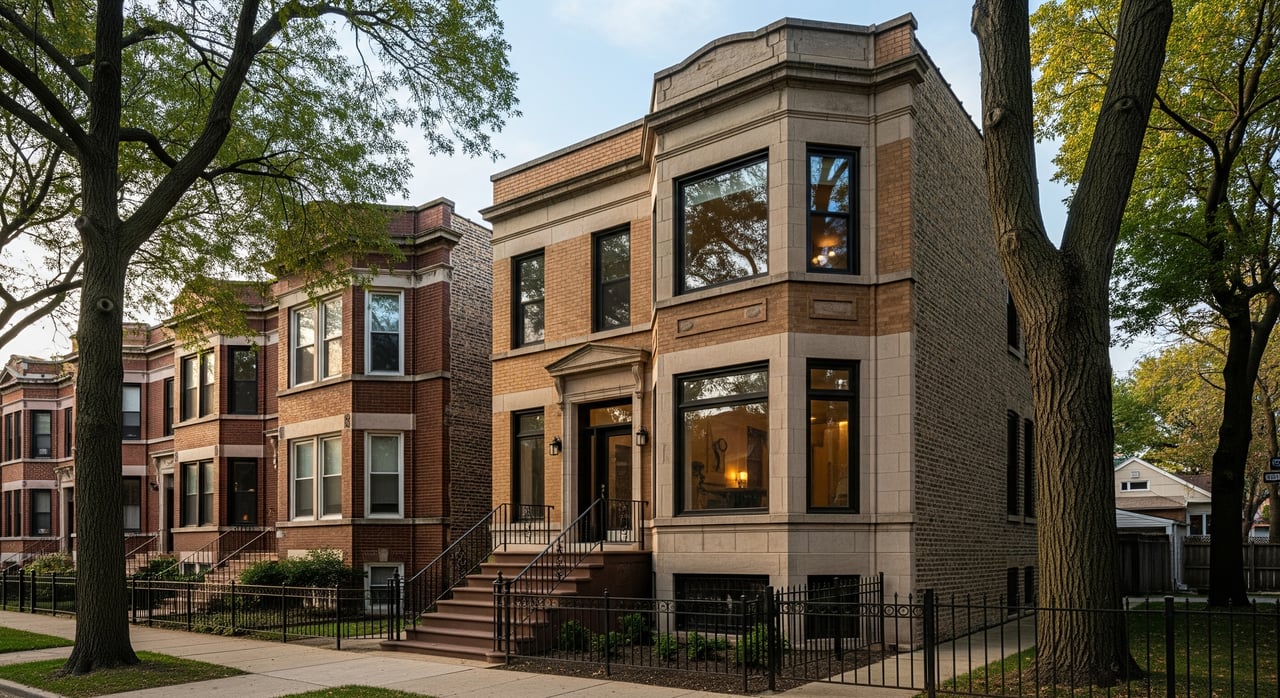
Thinking about a Chicago 2-flat because you want help covering the mortgage or a first step into investing? You are not alone. Many local buyers use this path to live in one unit and rent the other for steady income. In this guide, you will learn what a 2-flat is, how it compares to condos and single-family homes, what to inspect, how to finance, and a clear next-step plan for Chicago. Let’s dive in.
What a Chicago 2-flat means
A Chicago 2-flat is a single building with two self-contained residential units. Each unit typically has its own kitchen, bathroom, and sleeping spaces. The most common setup is one unit per floor, often accessed by a shared front stair or separate front and back entrances.
A 3-flat follows the same concept with three separate units, often stacked on the first, second, and third floors. In Chicago, many 2- and 3-flats are prewar brick or greystone walk-ups, though newer 2-4 unit infill buildings exist in some neighborhoods.
These buildings are part of the city’s historic housing pattern and remain popular with first-time investors and house-hackers because they offer density, solid construction, and access to transit-rich neighborhoods.
How 2-flats differ from condos and single-family homes
Understanding how a 2-flat compares to other options helps you choose the right path.
- Ownership and title: A 2-flat is one property on a single tax parcel with one owner of the whole building. A condo is different because each unit has its own deed and the building is run by an association.
- Management and responsibility: If you own a 2-flat, you are the landlord for both units. You handle building systems, maintenance, and tenant management. A condo owner focuses on the interior of a single unit and pays association dues for shared systems.
- Financing and tax treatment: Lenders and insurers treat 2-4 unit properties differently from single-family homes and condos. Owner-occupied multi-units often have favorable loan options, but underwriting rules and down payments can vary.
- Use case: A 2-flat supports a house-hack strategy. You can live in one unit and rent the other to offset your mortgage.
Typical layouts and features in Chicago 2-flats
Most Chicago 2-flats are stacked flats, with one unit per floor. You may also find buildings where one or both units are duplexed across two levels. Older buildings often feature 1 to 3 bedrooms per unit with larger rooms and formal layouts like parlors and dining rooms.
Basements are common. They often hold mechanical systems, laundry, and storage. Some basements have finished space as part of a rental unit. If you see a basement or garden apartment, verify the legal status and safe egress.
Utilities can be either separately metered or master-metered. Separate meters simplify operations and billing. If utilities are shared, you will need a clear tenant reimbursement setup.
Inspection priorities for older Chicago multi-units
Chicago 2- and 3-flats can be excellent long-term assets, but many are older buildings that need careful due diligence. Focus your inspection on the following:
- Structure and exterior: Foundation, settlement, exterior masonry or stone, and tuckpointing needs.
- Roof and drainage: Roofing condition, flashing, gutters, and downspouts to manage water away from the foundation.
- Mechanicals: Boiler or furnace, water heaters, and ventilation. Verify electrical panels and wiring, and look for outdated systems.
- Plumbing: Supply lines, drains, and risers. Older cast-iron or galvanized lines may need updates.
- Utilities and metering: Confirm separate electric and gas meters where possible. If shared, review how tenants are billed.
- Life safety: Egress from all living spaces, smoke and carbon monoxide alarms, and stair/porch safety.
- Water and pest history: Past water intrusion, mold, or pest issues.
- Lead-based paint: For buildings built before 1978, expect required disclosures and safe work practices.
- Permits and violations: Check for open permits, past work, and any City of Chicago code violations.
Practical inspection tips
- Hire an inspector who knows older Chicago multi-unit buildings.
- For major systems like the boiler, roof, or masonry, get specialty contractors to estimate near-term capital needs.
- Verify the legality of any finished basement or converted space before you rely on that rental income.
Zoning, permits, and legal basics in Chicago
Local rules shape what you can do with a 2-flat.
- Zoning: Chicago zoning controls what you can build and how many units are allowed. It affects whether you can add units, add parking, or pursue a future condo conversion. Check the zoning district for the specific parcel before you plan any change of use.
- Permits and building code: Structural changes, unit additions, or new plumbing and electrical work generally require permits from the City of Chicago Department of Buildings. Verify the permitted use history and certificates of occupancy for all existing units.
- Rental rules and tenant protections: Chicago has local tenant protection ordinances and requirements for habitability, notices, and screening practices. Consider engaging an attorney who understands local landlord-tenant law.
- Condo conversion: Turning a 2-flat into separate condos requires a formal legal process that includes disclosures, documents, and filings. It is a separate strategy with lead time and costs.
- Taxes and records: Cook County property records, assessed values, and tax bills are public. Property classification and exemptions, such as a homestead exemption if you live in the building, affect your tax burden.
Financing 2- to 4-unit properties in Chicago
You have several financing paths for 2-4 unit properties. Your best fit depends on whether you will live in the property and how you will use rental income.
- FHA loans: FHA financing is popular with house-hackers because it allows 1-4 unit owner-occupied purchases. Many lenders will consider a portion of projected rental income from the other unit(s) in underwriting. Confirm the exact treatment with your lender and current FHA guidance.
- Conventional loans: Conventional loans are available for owner-occupants and investors. Down payments and underwriting can differ from single-family loans, so ask about multi-unit specifics.
- Portfolio and local lenders: Community banks and credit unions sometimes offer more flexible products for older buildings or unique property features.
- Cash and investment loans: Some investors use cash or commercial-style loans when a property does not meet standard residential underwriting rules.
Owner-occupant vs investor differences
Owner-occupant loans often have better terms, including lower rates and lower down payment options. Lenders will look closely at unit separations, leases, and the stability of rental income. Expect to provide leases, a rent roll, and market rent evidence.
Down payment, credit, and reserves
Requirements vary by lender and program. Owner-occupied loans may allow lower down payments than pure investment loans, but multi-unit purchases can still require more cash than a typical single-family purchase. Lenders often expect reserves that cover several months of payments.
Rates and loan types
You will find both fixed-rate and adjustable-rate options for 2-4 unit purchases. Lenders pay close attention to your debt-to-income ratio and, for investors, the property’s ability to cover debt service.
Practical financing steps
- Get prequalified with a lender who regularly handles 2-4 unit loans.
- Ask how they treat rental income from other units during qualification.
- Provide leases, rent rolls, and, if available, tax returns showing rental history.
- Clarify reserve requirements before you submit offers.
Running the numbers like an investor
Even if you plan to live in one unit, evaluate the property with an investor mindset.
- Gross scheduled rent: The total rent if every unit is occupied.
- Vacancy allowance: Use a realistic local vacancy percentage.
- Operating expenses: Property taxes, insurance, utilities you pay, maintenance and repairs, trash and snow removal, supplies, and management if you outsource. Include legal, accounting, and reserves.
- Net operating income (NOI): Gross rent minus operating expenses. This shows income before your mortgage.
- Cash flow: NOI minus debt service. For house-hackers, this is how the second unit helps cover your mortgage.
- Capital expenditures (CapEx): Budget for big-ticket items like roof, boiler, tuckpointing, windows, or porch replacements. Older buildings often need higher near-term CapEx.
Market research for rent and demand
Check recent neighborhood rental listings, property manager insights, and market reports to estimate achievable rents and likely vacancy. Use multiple sources to validate your numbers.
Taxes, accounting, and insurance
- Report rental income and keep clean records of expenses and depreciation. A tax advisor can help you understand owner-occupied nuances and depreciation schedules.
- Review Cook County exemptions, such as the homestead exemption for owner-occupants, to lower your tax bill if you qualify.
- Use landlord or landlord-occupancy insurance. Standard homeowner policies may not cover rental exposures. Consider liability and umbrella coverage. If you plan short-term rentals, confirm coverage.
Property management and tenant rules
Many owner-occupants self-manage, while some investors hire property managers. Either way, you must comply with local tenant protection rules, lead paint disclosures for older buildings, security deposit rules, and proper eviction procedures if needed.
Common pitfalls and red flags
- Units added without permits or without legal egress.
- Shared utilities without a clear, legal billing arrangement.
- Major deferred maintenance not reflected in the asking price.
- Zoning conflicts or open code violations.
- Lack of separate electrical or gas meters that complicate billing and tenant relations.
A step-by-step buyer roadmap
Use this simple sequence to move from curiosity to closing with confidence.
Neighborhood and market check
- Pull sales and rental comps in your target neighborhoods.
- Confirm transit access and long-term demand drivers.
Lender engagement
- Prequalify with lenders who do 2-4 unit loans regularly.
- Ask how they treat rental income, down payment minimums, and reserves.
Early property screening
- Review Cook County records for taxes, owners, and the legal description.
- Check City of Chicago tools for permits, violations, or prior work.
Submit an offer with contingencies
- Include financing and inspection contingencies that address multi-unit specifics.
Inspections and specialist assessments
- Hire a multi-unit savvy inspector.
- Get contractor estimates for roof, masonry, mechanicals, or porches if needed.
- Verify separate meters or document how utilities are billed to tenants.
Legal and operational due diligence
- Request leases, security deposit records, a rent roll, and actual operating expenses.
- Confirm the legal status and permits for each living space.
- If you might convert to condos later, consult an attorney early.
Closing and post-closing setup
- Put landlord-appropriate insurance in place.
- If you will occupy a unit, file exemptions with Cook County as appropriate.
- Set clear rental agreements, house rules, and a maintenance plan.
Is a 2-flat right for you?
A Chicago 2-flat can reduce your housing cost while building long-term equity and rental experience. It requires hands-on management, careful inspection, and a clear financing plan, but the payoff can be meaningful if you buy smart and run the numbers. With the right team and due diligence, a small multi-unit can be a practical on-ramp to real estate wealth in Chicago.
If you want a local guide who understands multi-units, financing paths, and neighborhood economics, connect with Emir Vulic to map your house-hack or investment plan.
FAQs
What is a Chicago 2-flat vs a duplex?
- A 2-flat is one building with two separate full apartments, often one per floor; a duplex is a single residence spread over two levels inside one unit.
How does FHA treat rental income in a 2-flat purchase?
- Many lenders allow a portion of expected rent from the other unit to help you qualify, but exact percentages and documentation requirements vary by lender and current FHA guidance.
What inspections matter most for older brick 2-flats?
- Focus on structure and masonry, roof and drainage, boilers and electrical panels, plumbing risers, life-safety items, and any past water or code issues.
How do Cook County property taxes work for 2-flats?
- A 2-flat is one parcel with one tax bill; review Cook County Assessor records for assessments and exemptions and consider a homestead exemption if you will occupy a unit.
Do I need separate utility meters for each unit?
- Separate meters are preferred because they simplify billing, but some buildings have shared meters; if so, you need a clear and enforceable reimbursement setup.
Are garden or basement apartments legal in every 2-flat?
- No; legality depends on permits, zoning, and safe egress, so verify status with city records before counting basement income.
What are common red flags when evaluating a 2-flat listing?
- Non-permitted units, major deferred maintenance, unclear zoning or violations, shared utilities without agreements, and outdated mechanicals without replacement budgets.